Getting a Tax Refund Isn't the Flex We Think It Is
Let me be honest with you about something first.
I loved my tax refund.
Every single year, when that deposit hit, I felt it. That rush. That exhale. That "okay, we're good" feeling I didn't realize I had been waiting on all year long.
When I was younger, my refund meant one thing: the beach. I was thinking about warm sand, a good drink, and finally being able to breathe after months of grinding. That was real. That joy was real. I'm not taking that back.
Later, when I got serious about paying off my debt, my refund became my weapon. $1,000, sometimes $2,000, straight to the balance. Watching that number drop felt powerful in a way the slow monthly grind never quite did.
But here's the truth nobody told us.
That money was mine the whole time. Every single month. In the hands of a government I don't always agree with... My money was there doing absolutely nothing for me, while I was out here stretching every paycheck and waiting for April like it was Christmas morning.
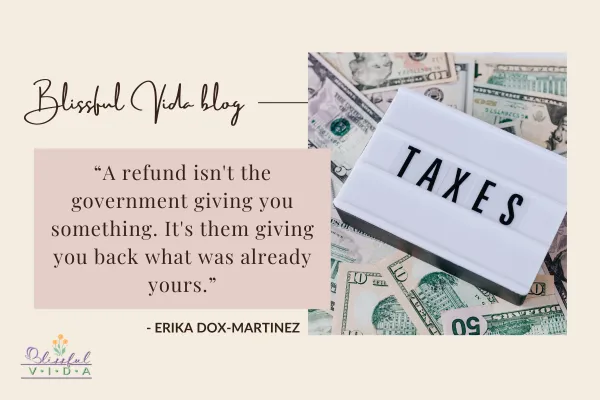
A refund isn't the government giving you something. It's them giving you back what was already yours.
And if I had kept it, if less had been taken out each month, I could have been putting an extra $100, $150, maybe more toward that debt every single month. Paying it down faster. Saving on interest. Getting free sooner.
Now would I have actually done that?
Honestly... I'm not sure.
And there's actually a reason for that. It's called mental accounting (a concept coined by Richard Thaler) which is the way our brains treat money differently depending on how we get it.
A lump sum feels like found money, like something extra, so we're more likely to do something intentional with it. A small recurring amount just feels like your paycheck got slightly bigger and quietly disappears into daily life without ever feeling like a choice.
It's not a character flaw. It's just how we're wired.
And for a lot of us, it goes even deeper than psychology.
For those of us who grew up in households where money was always tight, a windfall wasn't a strategy. It was a miracle. That refund carried more than dollars. It carried hope. It carried proof that we made it through another year.
Maybe you remember the adults in your life doing their taxes with their fingers crossed, just praying the number was good. Maybe that refund showing up meant the electric bill got paid, something finally got fixed, or your family could just breathe for a minute.
That's not a money mistake. That's survival. And survival deserves to be honored before it gets reframed.
But here's the thing. You're not just surviving anymore.
You're becoming. And that requires a different kind of thinking about where your money is, where it's been, and what it could be doing for you right now, not just every April.
So let's talk about it.
What a Tax Refund Actually Is
Every time you got a paycheck last year, a chunk of it went straight to the IRS before it ever hit your account. Your W-4, the form you filled out on your first day of work, probably without much guidance, decided how much.
Too much withheld all year? You get a refund in April. The government is simply returning the overpayment.
It's not a gift. It's not a bonus. It's your hard-earned money sitting with a government that doesn't always have our backs, while you got absolutely nothing in return for that loan you didn't even know you were giving.
But What If You Need That Lump Sum?
This is the part most financial educators skip. And it's the part I think matters most.
For a lot of us, that lump sum serves a real purpose. It's the one time a year we have enough in one place to make a real move. If that's where you are, that's okay. This isn't about shame. It's about awareness.
Because once you know what's actually happening, you get to decide. Maybe you keep your withholding the same because the lump sum works better for how you manage money right now.
Maybe you adjust it and put a plan around that extra monthly cash. Maybe you talk to a tax professional about what makes sense for your situation, especially if you have kids, multiple jobs, or any big life changes.
The goal is to make a conscious choice, instead of letting the default decide for you.
So What Can You Actually Do?
If you want to explore keeping more of your money throughout the year instead of waiting for April, here are a few places to start:
Use the IRS Tax Withholding Estimator at IRS.gov to get a baseline sense of where you stand.
Think about adjusting your W-4 for your specific situation and/or talk to a tax professional.
If you do adjust, have a plan for where that extra monthly money goes. Without a plan, it tends to quietly disappear.
If you have 1099 or self-employment income, quarterly estimated taxes are your version of withholding.
One More Thing
If this blog got you thinking that you need to look at your withholdings or work on your taxes or knock out any other money task that has been sitting on your to-do list, come do it in community with other women who get it.
Dates with Dinero is my free money co-working space where we show up for our finances together. No slides, no lectures, no pressure. Just us, checking things off our money to-do list... together.
Click here for more details and to learn more about how to join us for this money date.
You deserve to live in BLI$$. 💸
With Love and Gratitude,
Erika Dox-Martinez
Trauma of Money Certified Financial Wellness Coach - CEO & Founder of Blissful Vida

DISCLAIMER: This blog is for educational and informational purposes only. Erika Dox-Martinez is not a licensed financial advisor, CPA, or therapist. Nothing here constitutes personalized financial, tax, or mental health advice. Please consult a qualified professional for guidance specific to your situation.